

Philosophy
Technology changes constantly.What remains is the ability tounderstand, adapt, and create.
- System
- Human + Machine Learning
- Focus
- Understanding → Building → Evolving
- Status
- Always learning
- Principle
- Delivering a build to perfection
From writing programs to building intelligent systems.
Each node is a stage where the way I approached problems changed, not just the tools I happened to be using.
Where it started University Beginning
Started programming with C++ and learned fundamentals of logic building.
- C++

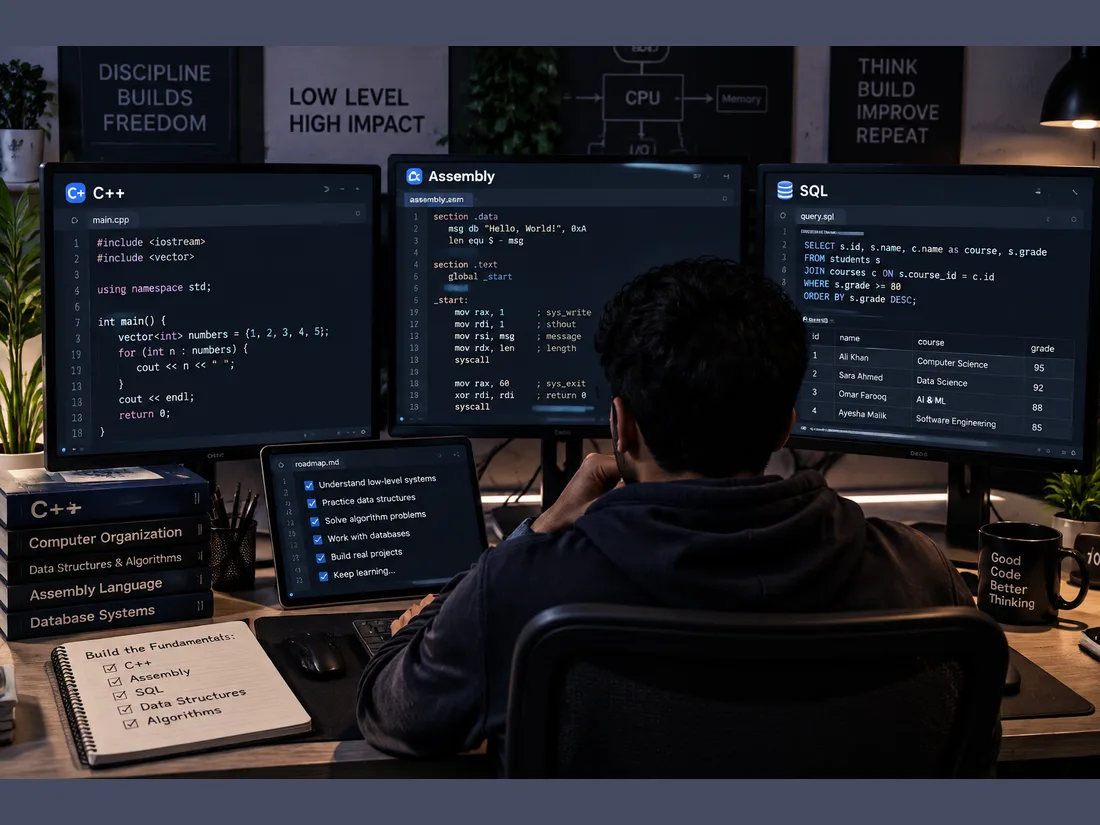
The groundwork Building Foundations
Explored Assembly, SQL, data structures, and algorithms, the base underneath everything built since.
- C++
- Assembly
- SQL
Shipping real systems Full Stack Development
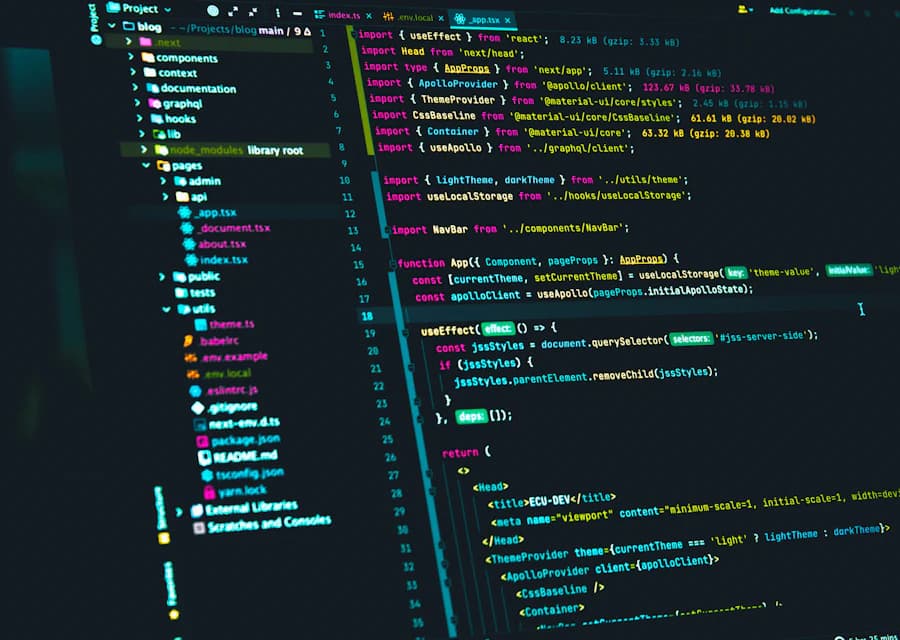
Started building complete systems: websites, APIs, databases, automation tools.
- React
- FastAPI
- JavaScript
- TypeScript
Learning how machines learn Entering Artificial Intelligence
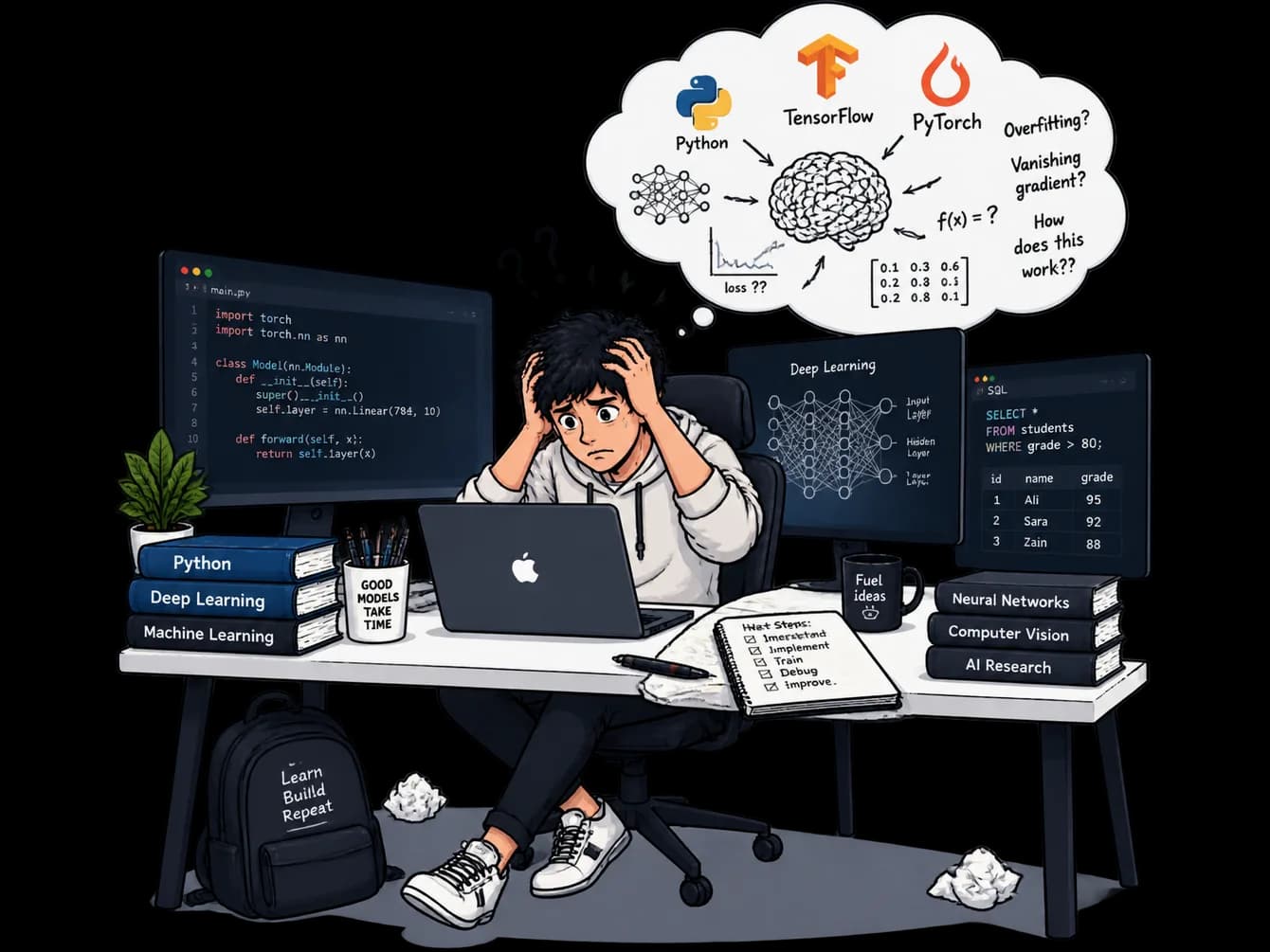
Moved towards machine learning, deep learning, and neural networks.
- Python
- TensorFlow
- PyTorch
Systems that act AI Systems & Agents
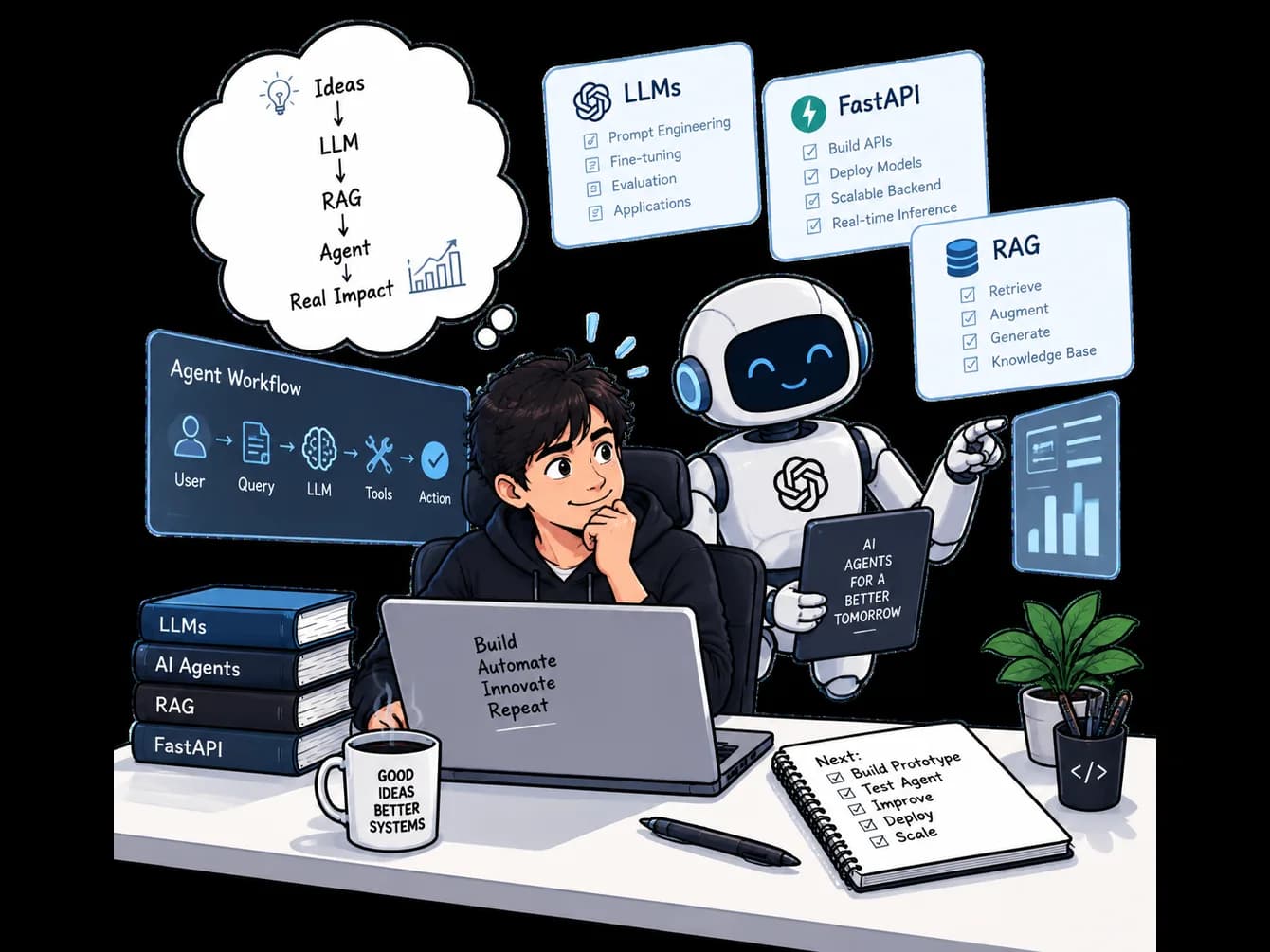
Exploring AI agents, LLM applications, and intelligent automation.
- LLMs
- FastAPI
- RAG
What comes next Future Exploration
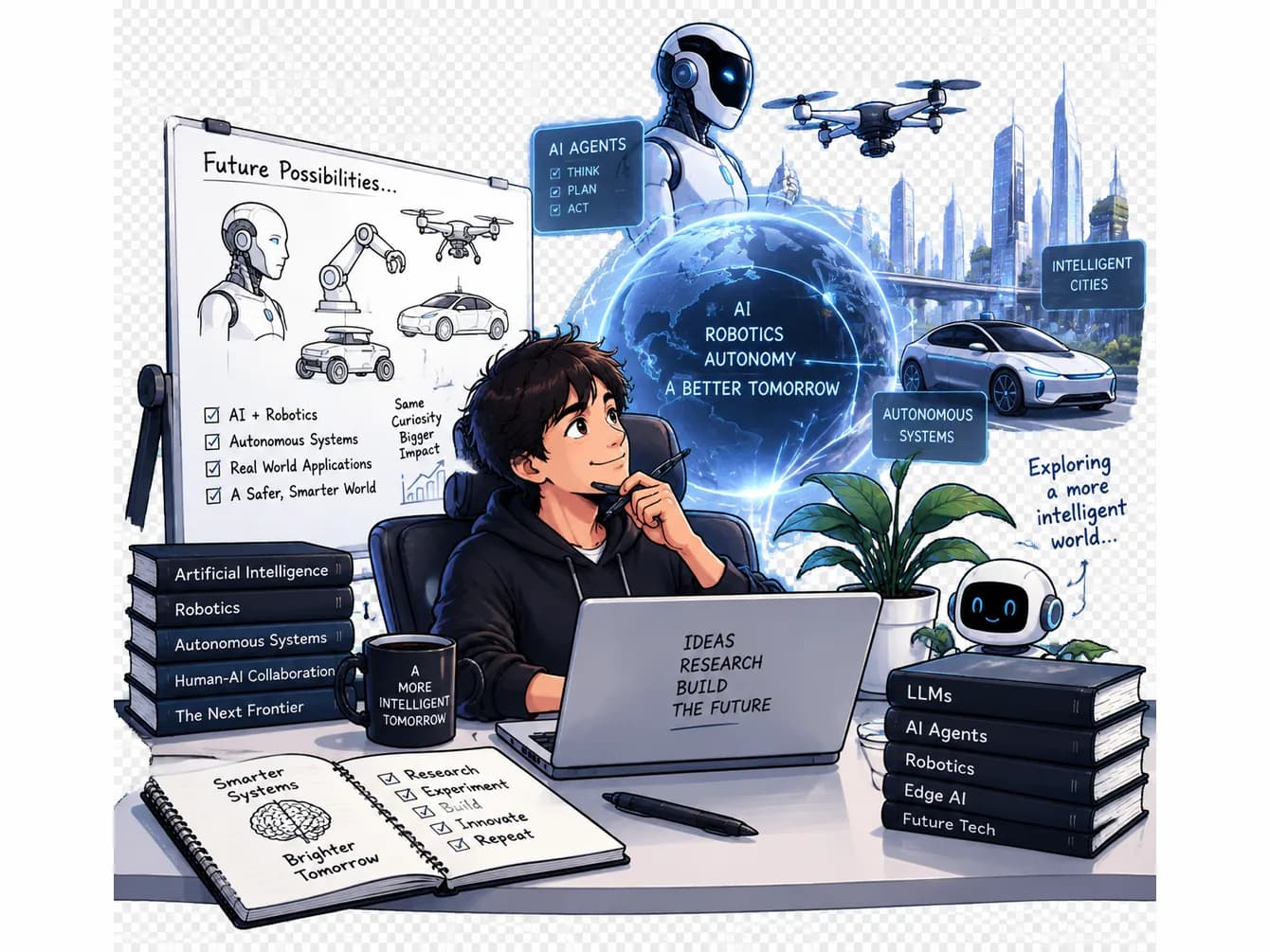
Exploring the future of intelligent machines: the long-term intersection of artificial intelligence, robotics, and autonomous systems.
How I think, not just what I built.
The starting point
When I first entered university, programming was completely unfamiliar. I started with C++ without knowing how software was actually built.
no map, just a compiler
method.loopwhile (learning) { understand(); build(); improve(); }Every stage in the map above ran this loop. The tools changed each time. The loop didn’t.
The first principle
The biggest challenge was not learning syntax. It was learning how to think.
syntax is the easy half
learning.pydef learn(concept): while not understood(concept): study(concept) build_with(concept) return teach(concept) # teaching exposes the gapsAI as a learning partner
As AI evolved, it changed the way I approached technology. Instead of replacing learning, AI became a mentor that helped me explore concepts, debug ideas, and build systems faster.
a mentor, not a shortcut
~/research$ python -m venv .venv && source .venv/bin/activate $ pip install torch transformers fastapi torch ............. [====================] ok transformers ...... [====================] ok fastapi ........... [====================] ok $ jupyter lab --no-browser [I] Jupyter Server running $Teaching as research
By helping other students solve programming problems, I discovered that teaching others exposed new questions and helped me grow further.
explaining it reveals the gaps
teaching.py1def teach(student):2 explain(concept) # breaks down complex ideas3 solve(problems) # discovers new questions4 discuss(approaches) # different perspectives5 learn_together() # teaching is a two-way process67 return growth()89# By helping other students solve programming problems,10# I discovered that teaching others exposed new questions.1112# explaining it reveals the gapsCurrent belief
The future of technology is not about memorizing hundreds of tools. It is about understanding concepts, solving problems, creating ideas, and knowing how to use intelligent systems effectively.
concepts outlive tools
>_beliefs.sh1echo "My current belief:"2echo ""3echo "The future of technology is not about memorizing tools."4echo "It is about understanding concepts, solving problems,"5echo "creating ideas, and using intelligent systems well."6echo ""78# Because the goal is not to use technology,9# but to create meaningful solutions with it.
How I build intelligent systems.
One continuous loop, not a checklist. Each phase hands something to the next, and the last one hands it back to the first.
Understand
Concepts before frameworks.
- PythonPrimary language for models, data work and backend services.
- C++Where the fundamentals were learned: memory, types, systems thinking.
- AlgorithmsComplexity and correctness reasoned about before optimising anything.
- Data StructuresChoosing the right shape for the data before writing the logic.
- MathematicsThe linear algebra and statistics sitting underneath every model.
Every system starts with understanding the problem. Focus on fundamentals, architecture, algorithms and reasoning before selecting tools.
Experiment
Ideas become prototypes.
- JupyterNotebook for exploring data and testing an idea before committing to it.
- PyTorchBuilding and training neural networks.
- TensorFlowTraining and serving deep learning models.
- Hugging FacePretrained models and datasets to start from instead of from scratch.
- OpenAI APIsLanguage-model capability called as a service.
Build small experiments, test assumptions, and turn concepts into working AI solutions before committing to an architecture.
Engineer
From prototypes to reliable systems.
- ReactComponent-driven user interfaces.
- Next.jsRouting, rendering and the build pipeline for the frontend.
- TypeScriptTypes that catch mistakes before they ever run.
- FastAPITyped Python APIs with validation built in.
- PostgreSQLRelational store for structured application data.
- DockerThe same environment in development as in production.
- LinuxThe environment nearly all of this actually runs on.
- GitVersion history, every change reversible, nothing lost.
- GitHubWhere code is hosted, reviewed and collaborated on.
Turn experiments into scalable applications with clean architecture, APIs, databases, containers and a professional development workflow.
Evolve
Systems improve through feedback.
- AWSCloud infrastructure to deploy and scale on.
- CI/CDAutomated checks and deploys on every single change.
- AI AgentsSystems that plan and act, rather than only respond.
Continuously learn, monitor, improve and explore emerging technologies: the stack underneath a working system moves faster than the system does.
Teach & Share
Knowledge grows when shared.
- ExplainingWalking someone else through it, the fastest way to find your own gaps.
Teaching programming and explaining concepts reveals deeper understanding and improves engineering thinking. The loop restarts here with a better starting point.
↺ Teach & Share feeds back into Understand. The loop restarts with a better starting point each time.
Nothing here works in isolation.
Drag a node, or hover to trace what it touches.